How Much Does It Cost to Build an MVP in 2026?
The honest answer is "it depends" — but here's what it actually depends on, and realistic ranges for different kinds of products.

Every founder asks this question, and every honest answer starts with "it depends" — which is true, but not very useful if you're trying to raise the right amount of money or decide whether your idea is even financially viable to pursue. So let's get more specific about what it actually depends on, and what realistic numbers look like.
The three things that actually drive cost
Complexity of the core workflow. A simple content app (browse, save, share) is a fundamentally different build than something with real-time features, payments, multi-sided marketplaces, or complex business logic. The number of screens matters far less than most founders assume — a five-screen app with a genuinely hard problem at its core (matching algorithms, real-time sync, complex permissions) costs more than a thirty-screen app that's mostly forms and lists.
How much needs to be custom versus assembled. Auth, payments, push notifications, and basic CRUD screens are largely solved problems — you're integrating existing services (Stripe, Cognito, Firebase) rather than building from scratch. The moment your MVP includes something genuinely novel — a custom recommendation engine, a unique real-time interaction model — that's where cost climbs, because there's no off-the-shelf piece to lean on.
Platform scope. iOS only, versus iOS and Android, versus a responsive web app that works everywhere, are three different cost profiles. A cross-platform framework can narrow this gap significantly, but it doesn't eliminate it — some features (deep OS integrations, certain performance-sensitive experiences) still benefit from native code per platform.
Realistic ranges
These vary by region and team, but as a rough guide for a professionally built MVP (not a weekend hackathon project, not a fully-staffed six-month enterprise build):
A simple, single-platform app with standard features (auth, a handful of core screens, basic data storage) — think low five figures on the low end, scaling up from there based on design polish and platform count.
A moderately complex product — a marketplace, a booking system, something with payments and multiple user roles — typically lands meaningfully higher, often in the range where the backend architecture and business logic account for more of the cost than the visible UI.
Anything with genuinely novel technology — custom AI features, real-time collaborative editing, complex matching or pricing algorithms — the range widens considerably, because you're paying for R&D and iteration, not just implementation of known patterns.
Treat any number you see quoted online (including these) as a starting orientation, not a quote. The actual number for your specific idea depends entirely on the scope decisions in the next section.
The real lever: what you leave out
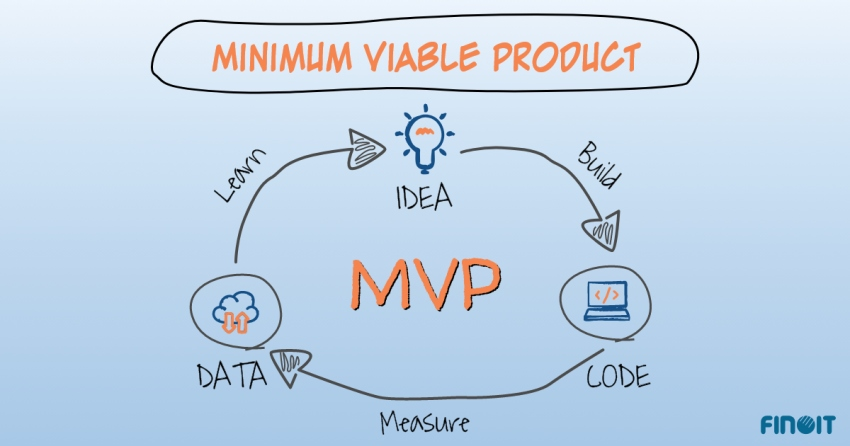
The single biggest cost driver isn't your industry or your platform choice — it's how disciplined you are about what actually belongs in version one. Founders consistently want to include features that matter for the long-term vision but aren't required to test whether anyone wants the core product at all.
A genuinely minimal MVP answers one question: does this specific core workflow solve a real problem for real users, well enough that they'd come back or pay for it? Everything else — admin dashboards, advanced settings, secondary user roles, "nice to have" screens — can wait until you know the answer to that question is yes.
Cutting scope isn't a compromise on quality. It's usually the single highest-leverage decision a founder makes, because every feature you don't build in version one is money and time you still have when you find out what users actually want changed after they use the real thing.
What this means practically
Before asking "how much will this cost," it's worth spending real time on "what is the smallest version of this that actually tests my core assumption." That exercise alone often cuts projected scope — and cost — by a third or more, and it does it in a way that makes the product better, not worse, because it forces clarity on what actually matters.
If you're not sure where that line is for your specific idea, that conversation is worth having with whoever's going to build it, before a single estimate gets written down. The right MVP is the smallest one that tells you the truth.