reviews_ui_kit: drop-in rating & review widgets for Flutter
A model-agnostic Flutter package for rating summaries, sortable review lists, and review cards — extracted from a production marketplace app so you don't have to rebuild the same avatar-name-stars-text layout from scratch.

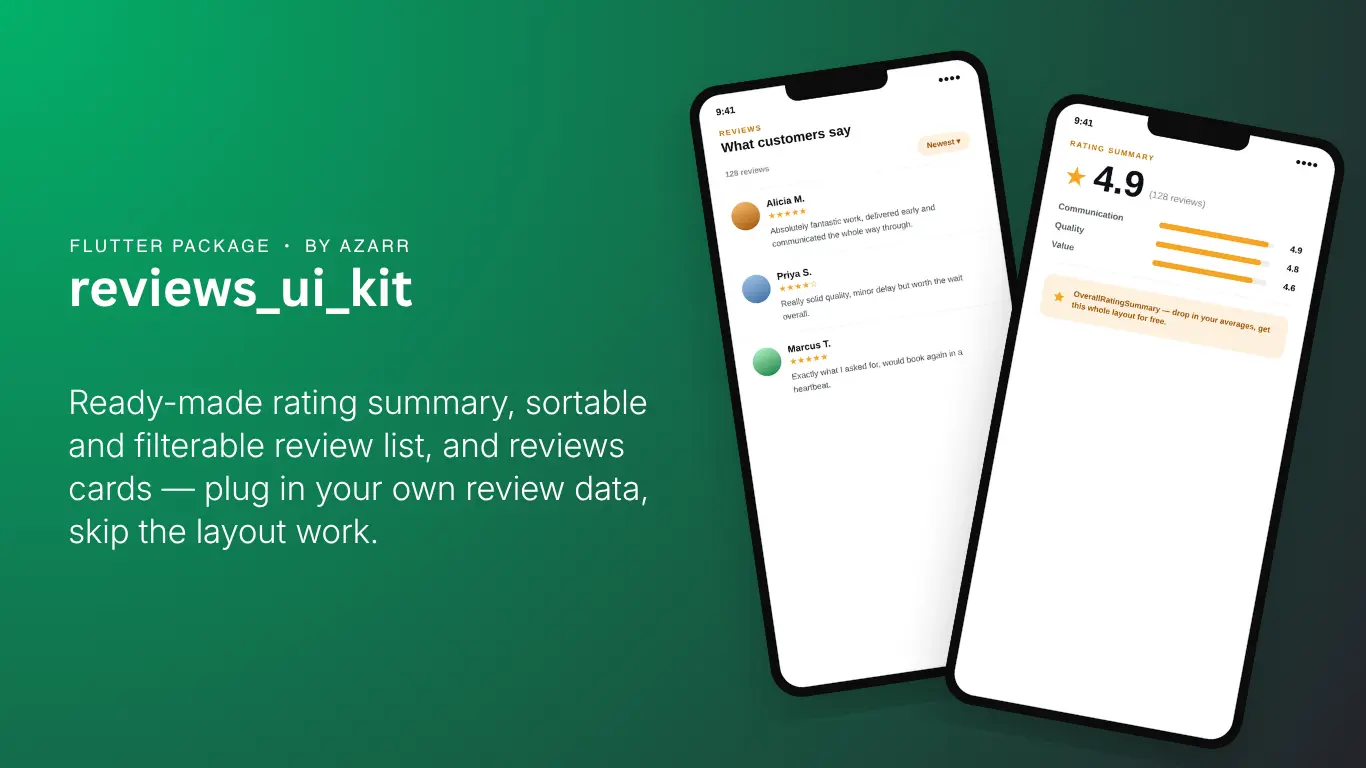
Every marketplace, booking, or service app eventually needs a reviews feature — and every team ends up rebuilding the same four things: an average-rating summary, a sortable list of review cards, a star-picker for leaving a new review, and the loading skeletons to match. We'd built that stack three separate times across different Azarr projects before we finally extracted it into a package. reviews_ui_kit is that extraction, generalized so it drops into any Flutter app regardless of your backend, state management, or model shapes.
It's live on pub.dev now: pub.dev/packages/reviews_ui_kit.
Where this came from
reviews_ui_kit started life as the review screens inside Masters Konnect, a services marketplace app we maintain. Customers leave star ratings and written reviews for vendors; vendors reply; everyone sorts and filters. The widgets worked well, but they were wired directly to the app's own NewReviewModel, AppColor theme constants, and a specific set of sub-rating categories (communication, recommend-to-friend, service-as-described). None of that is reusable as-is.
Pulling it into a standalone package meant answering one question for every widget: what's the minimum shape of data this actually needs? The answer became ReviewData — a small, plain, immutable class with no ties to any ORM or model. Map your backend's review object into it once, and every widget in the kit just works.
Install
dependencies:
  reviews_ui_kit: ^0.1.0
The rating summary
import 'package:reviews_ui_kit/reviews_ui_kit.dart';

OverallRatingSummary(
  averageRating: 4.8,
  totalReviews: 128,
  subRatings: {
    'Communication': 4.9,
    'Quality': 4.8,
    'Value': 4.6,
  },
)
subRatings is a plain Map<String, double> rather than a fixed set of named parameters — so it works whether your app tracks three sub-ratings, five, or none at all. Leave it out (or pass an empty map) and you get just the headline number, no breakdown.
A sortable review list
final reviews = <ReviewData>[
  ReviewData(
    customerName: 'Alicia M.',
    rating: 5,
    reviewText: 'Absolutely fantastic work, delivered early.',
    date: DateTime.now().subtract(const Duration(days: 2)),
    country: 'Jamaica',
    vendorReply: 'Thank you so much!',
  ),
  // ...
];

ListView(
  children: [for (final r in reviews) ReviewListItem(review: r)],
)
ReviewListItem renders the full card — avatar, name, country, star rating, relative date, review text (or a large decorative star row when there's no written text), attachment thumbnails, and the vendor's reply bubble if one exists. Wire up sorting with ReviewSortOption and the matching bottom sheet:
ReviewSortOption sort = ReviewSortOption.newest;

IconButton(
  icon: const Icon(Icons.sort),
  onPressed: () => ReviewFilterSheet.show(
    context,
    current: sort,
    onSelected: (opt) => setState(() => sort = opt),
  ),
)
onSelected just tells you which option the user picked — you sort your own list however you fetch or cache it, so this works whether reviews live in local state, a paginated API, or a database query.
Writing a review
double? rating;
final controller = TextEditingController();

Column(
  children: [
    RatingRow(
      label: 'Overall rating',
      value: rating,
      onChanged: (v) => setState(() => rating = v),
    ),
    ReviewInputField(controller: controller, hintText: 'Write your review...'),
  ],
)
RatingRow is one labeled row of five tappable stars — drop in several of them for sub-ratings on a review form, same as the summary widget above but for input instead of display.
Making it look like your app, not ours
Every widget ships with sensible defaults, but the three places apps differ most — date formatting, country flags, and attachment rendering — are builder callbacks, not hardcoded behavior:
ReviewListItem(
  review: review,
  dateLabelBuilder: (date) => DateFormat.yMMMd().format(date),
  flagBuilder: (country) => countryFlagEmoji(country),
  attachmentBuilder: (context, url, allUrls, index) => GestureDetector(
    onTap: () => openYourOwnGallery(allUrls, index),
    child: YourMediaThumbnail(url: url),
  ),
)
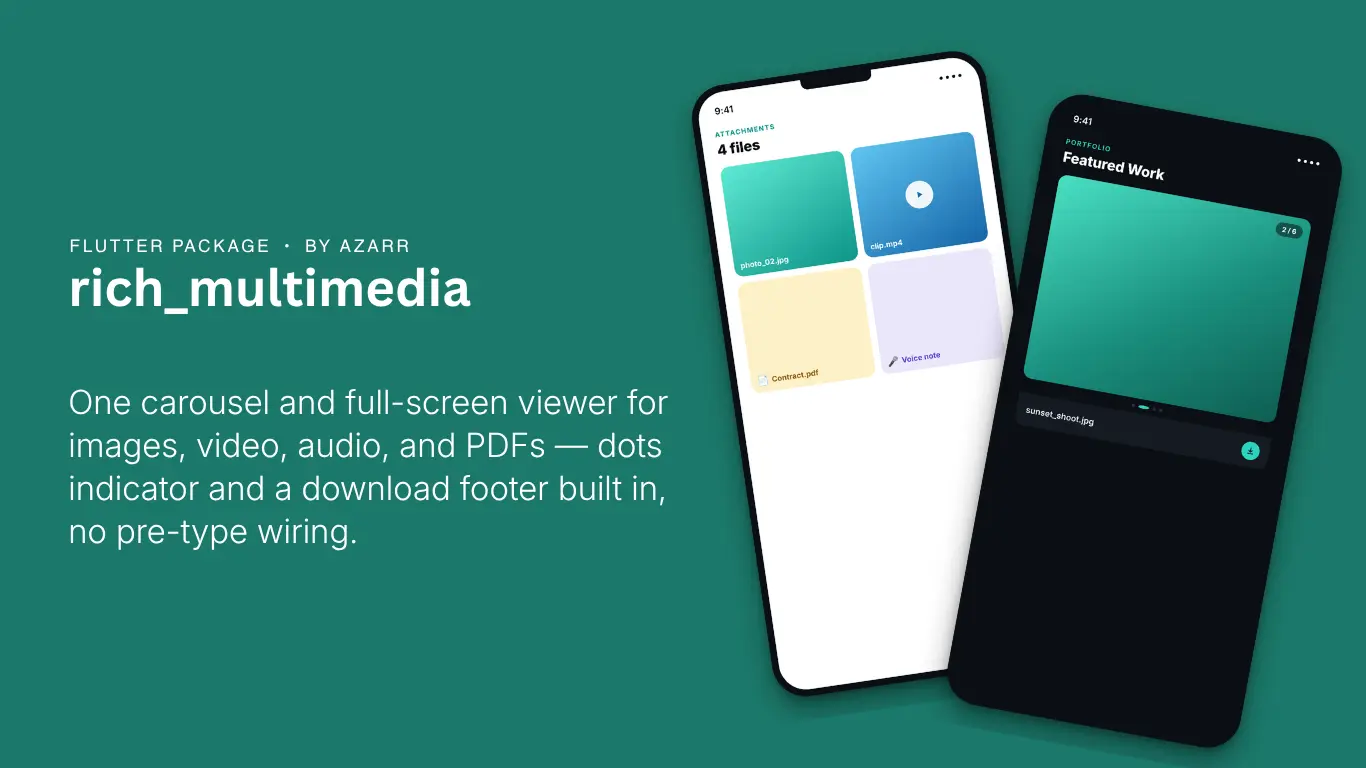
That attachmentBuilder hook is deliberate — it's the exact seam where a package like our own rich_multimedia slots in to render photo, video, audio, and PDF attachments on a review, without reviews_ui_kit needing to depend on it directly. Two small packages, composed, instead of one large one.
Loading states, for free
isLoading ? const ReviewListShimmer(count: 5) : reviewListView
ReviewListItemShimmer, ReviewLoadMoreShimmer, and ReviewListShimmer match ReviewListItem's real layout pixel-for-pixel, so your loading state doesn't jump around once data arrives.
Why a plain class instead of generics
We went back and forth on whether ReviewListItem should take a generic ReviewListItem<T> with a dozen field-extractor callbacks, or a small, explicit ReviewData class. We landed on the plain class: review widgets almost always need the same handful of fields — name, avatar, rating, text, date, attachments, a reply — so mapping your model into ReviewData is usually a one-line .toReviewData() extension, and the widget's public API stays readable instead of disappearing behind type parameters.
Try it
dependencies:
  reviews_ui_kit: ^0.1.0
Full API reference, more examples, and the source are on pub.dev. If you build something with it, we'd like to hear about it.